





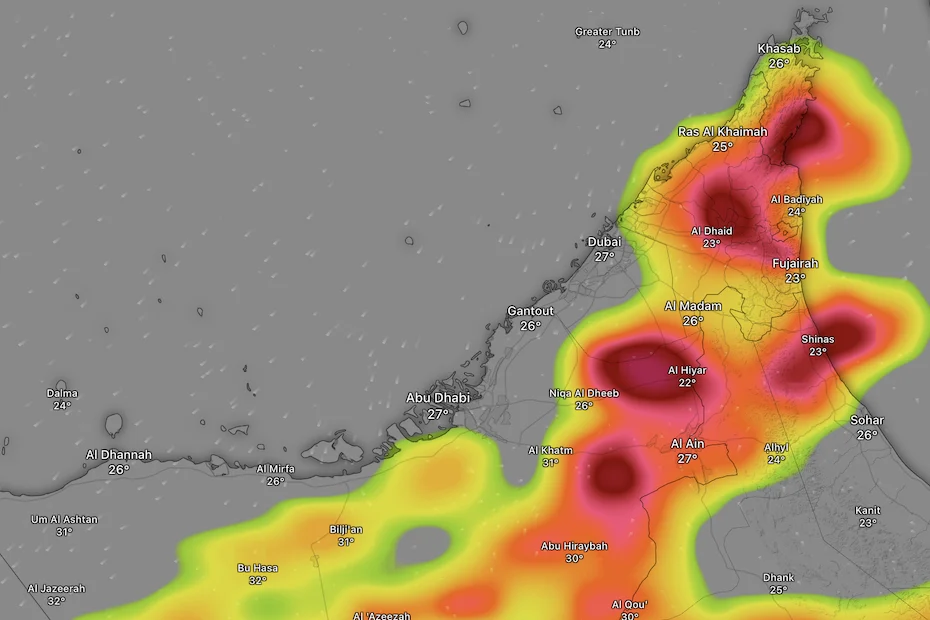
As if three weeks of Iranian missile attacks were not enough to contend with, the UAE is now dealing with another challenge entirely. A significant weather system has settled over the country bringing with it rain, thunderstorms and the possibility of hail across Dubai, Abu Dhabi and the northern emirates. Authorities have issued formal warnings and the National Emergency Crisis and Disaster Management Authority is actively monitoring the situation. Here is everything you need to know to stay safe and plan your week.
Official Weather Warning

The National Centre of Meteorology has forecast unstable weather conditions persisting across the UAE until at least Friday March 27. The warning covers rain of varying intensity, potential thunderstorms on multiple days, the possibility of hail in some areas and strong winds that could lead to blowing dust and significantly reduced visibility. The weather system is being driven by a surface low-pressure system combined with an extension of a weak upper-air low-pressure system over the region.
NCEMA said it is taking proactive measures to ensure readiness across all sectors and is prepared to activate business continuity plans where necessary. Given that schools and many private sector workplaces have already shifted to remote operations due to the Iran conflict, the practical disruption from the weather may be somewhat limited for those already working from home.
Day by Day Forecast
Sunday March 22 brings cloudy conditions with rain and strong winds gusting up to 45 kilometres per hour. Seas will be moderate to rough. Monday March 23 sees partly cloudy skies with scattered rain possible and winds continuing at 15 to 25 kilometres per hour with gusts to 45. Tuesday March 24 brings another partly cloudy day with a chance of scattered rainfall and similar wind conditions. The pattern is expected to ease slightly toward the end of the week but unstable conditions will continue through to at least Friday.
In Dubai, daytime temperatures will range between 26 and 30 degrees Celsius throughout the wet spell with overnight lows between 20 and 22 degrees. In Abu Dhabi the range is similar, between 27 and 30 degrees during the day with nights around 21 to 23 degrees. The cooler temperatures and cloud cover represent a significant departure from the typically warm, sunny conditions of late March.
Driving Safety — Speed Limits Reduced
Abu Dhabi Police have advised all drivers to exercise caution and to follow variable speed limits posted on electronic signboards on the emirate’s roads. Abu Dhabi typically reduces speed limits to 80 kilometres per hour during severe weather conditions including heavy rain, thick fog and dust storms. Drivers should follow the electronic signs rather than assuming that normal speed limits apply during the rainfall period.
Across both Dubai and Abu Dhabi authorities are urging residents to avoid wadis and flood-prone areas during and immediately after rainfall. Even relatively brief but intense downpours can cause rapid water accumulation in low-lying areas and underpasses. Drivers who encounter flooded roads should not attempt to drive through standing water regardless of how shallow it appears. Residents are also advised to carry first aid kits and alternative light sources in their vehicles during the wet period.
What About the Loud Sounds
This is particularly important during the current period. If you hear loud bangs or booming sounds over the coming days do not automatically assume they are from air defence operations. Thunder during thunderstorm conditions can produce sounds that are very similar to what residents have become accustomed to hearing from missile interceptions. The reverse is also true. During active weather conditions the sounds of interceptions may be harder to distinguish from natural thunder.
The guidance from authorities remains consistent. Follow official UAE government channels for information. If you receive an official alert from UAE government systems about a security incident that is distinct from a weather event. In the absence of an official alert loud sounds during a thunderstorm are most likely thunder.
Beach and Outdoor Activities
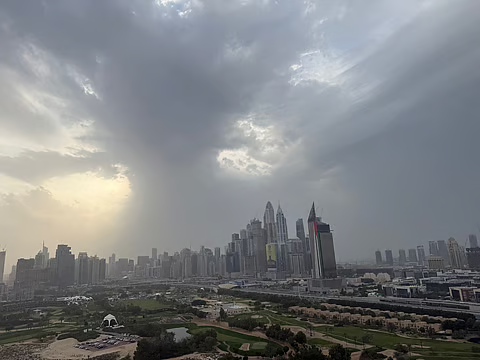
Given that this is the Eid Al Fitr long weekend many residents had planned outdoor activities. The weather system will significantly affect beach conditions across both Dubai and Abu Dhabi with rough seas and strong winds making water activities inadvisable on several days. Dubai Municipality has deployed advanced beach safety systems including aquatic rescue robotics and aerial water-rescue drones but residents are advised to avoid swimming or water sports during the rough sea conditions.
Outdoor dining and beach picnics will also be affected by the rain and wind. If you are planning to visit outdoor venues this week it is worth checking with the specific location before travelling as some may adjust their hours or offerings based on the weather conditions.
The Broader Context
This weather system arrives at an already challenging moment for the UAE. The country is simultaneously managing the ongoing security situation with Iran, the disruption to Dubai airport flight operations and now a week of significant rainfall. The resilience that UAE residents have shown over the past three weeks will be tested again this week though the weather, unlike the missile threat, at least has a clear end date.
For the latest on the security situation and flight status read our articles on UAE air defences and the Iran conflict and Dubai airport flights update. For Eid activities happening despite the weather read our complete Eid Al Fitr 2026 UAE guide.
Follow InsideDubaiNow on Instagram, X, TikTok and our WhatsApp Channel for live updates.
Source: National Centre of Meteorology, NCEMA, Abu Dhabi Police, The National, Gulf News