





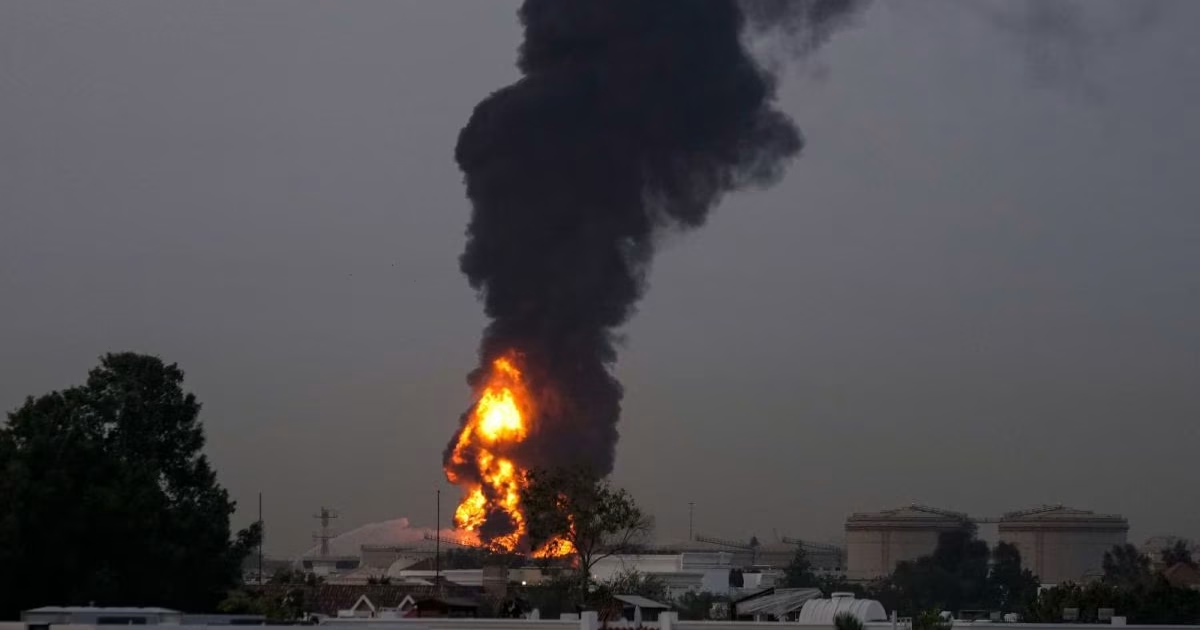
The war did not take the day off for Eid.
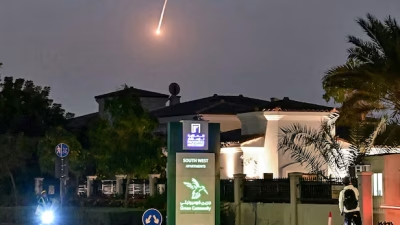
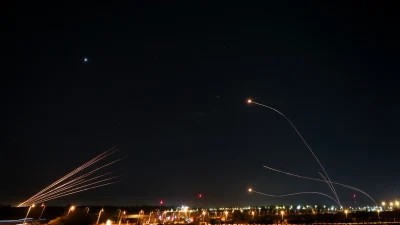
As families across the UAE prepared for the first morning of Eid Al Fitr, Iranian missiles and drones crossed into UAE airspace. As they have every single day for the past three weeks. And as they have every single day for the past three weeks, the UAE’s air defence systems went to work and brought them down.
The booms some residents heard before sunrise this morning were not fireworks. They were the sound of a country defending itself. Again. This is Day 22.
What Happened Overnight
The overnight picture for the UAE was consistent with what has become an almost routine pattern — Iranian projectiles detected, air defences activated, intercepts confirmed, residents advised to get information only from official sources.
The numbers building up over 22 days are staggering. Since February 28, UAE air defence systems have dealt with 338 ballistic missiles, 15 cruise missiles and over 1,740 drones. Eight people have been killed on UAE soil — six civilians, all foreign nationals from Pakistan, Nepal, Bangladesh and Palestine — and 158 people of more than two dozen nationalities have been injured.
The UAE was never a party to this war. It did not strike Iran. It did not ask to be pulled in. And yet it has absorbed more incoming fire than almost any other country on earth over the past three weeks, second only to Israel itself.
The reason for that is not accidental. For Iran, hitting the UAE simultaneously pressures Washington — whose troops are based at Al Dhafra — disrupts global energy flows, rattles international business confidence and creates headlines that reverberate far beyond the Gulf. The UAE is not just a military target. It is a statement.
Trump Says the War Is Almost Won. More Troops Are Heading There Anyway.
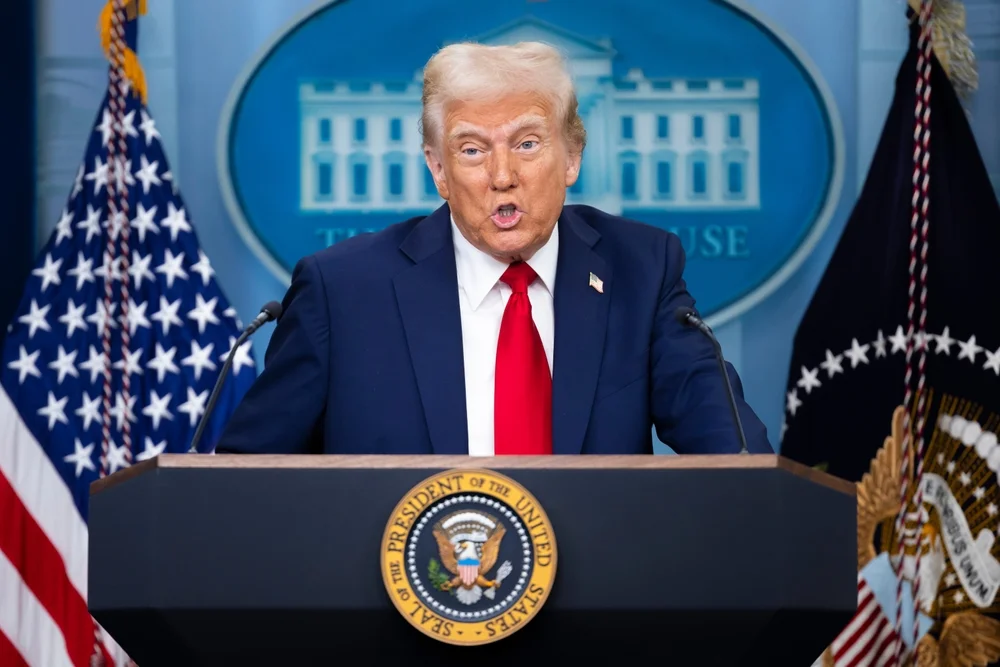
The loudest voice in the room yesterday was, as it has been throughout, Donald Trump.
The US President posted on Friday that his administration is considering winding down military operations in the Middle East, claiming the US is getting very close to meeting its objectives. Those objectives, as he laid them out, include completely destroying Iran’s missile capability, eliminating its navy and air force, preventing any path to a nuclear weapon and protecting US allies in the Gulf — including the UAE.
He also turned on NATO allies, calling them cowards for refusing to join the US effort to reopen the Strait of Hormuz. “COWARDS, and we will REMEMBER!” was his exact phrasing on social media.
Here is the problem with the wind-down narrative. Even as Trump was posting about winding down, the Pentagon confirmed that thousands of additional US Marines are heading to the Middle East. Iran’s response to Trump’s wind-down claim, through a senior source quoted by CNN, was that Tehran does not believe him. And overnight, the missiles kept coming.
Israel added its own complication. Prime Minister Netanyahu announced that Israel would halt strikes on Iranian energy sites — a move that came after Trump reportedly reacted with anger to an Israeli strike near the South Pars gas field, one of the world’s most significant energy infrastructure sites. That the US and Israel are apparently not in perfect alignment on targeting decisions, three weeks into a war they launched together, tells you something about how complex this has become.
The Economic Pain Is Now Everyone’s Problem
Whatever happens militarily in the days ahead, the economic damage from three weeks of this war has already spread to every petrol station, airline and supermarket on the planet.
Oil settled at $112.19 a barrel on Friday. Goldman Sachs said this week that elevated prices could last through 2027. The US, in an extraordinary move that underscores how desperate the energy situation has become, temporarily lifted sanctions on 140 million barrels of Iranian oil — the very country it is currently bombing — in an attempt to take some pressure off global markets. Even that, analysts say, will not be enough to move the needle meaningfully in the short term.
The Strait of Hormuz remains effectively closed to normal traffic. One fifth of the world’s oil supply passes through that waterway. The longer it stays closed, the deeper the economic consequences run — not just for the UAE and its Gulf neighbours but for Europe, Asia and every economy on earth that runs on energy.
Qatar’s Ras Laffan LNG facility, which was struck by Iran earlier in the week, has had its output cut by around 17 percent. Qatar supplies 20 percent of global LNG. The downstream effects of that alone will take years to fully work through.
The UAE Is Still Standing. And Still Celebrating.

Here is what makes Day 22 genuinely different from almost any comparable situation in modern history.
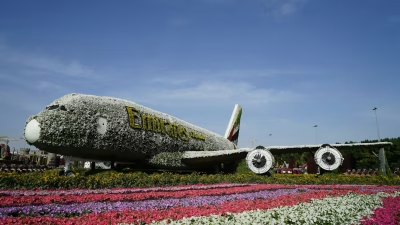
A country that has absorbed 338 ballistic missiles, over 1,700 drones, fires at its biggest port, damage to its most iconic hotel, strikes near its busiest airport and the deaths of eight people on its soil — that country is, this morning, celebrating Eid. Its malls are open. Its families are out. Its streets are busy. Its Miracle Garden was so crowded yesterday they had to cancel the free entry because too many people showed up.
That is not an accident. It is not denial. It is a deliberate, collective and deeply human refusal to let the war define what life here looks like.
The UAE has spent years, and enormous resources, preparing for precisely this kind of threat. Its air defence capability has performed at a level that has surprised even its allies. Its civil infrastructure has continued functioning. Its leadership has remained visible and calm. There is a reason the world is watching this country right now with something that looks, despite everything, a lot like respect.
Day 22 is not over. The situation remains fluid, as it has every single day since February 28. But this morning, on Eid, the UAE is still here. Still defending. Still celebrating.
For the latest on how Dubai Airport is operating today read our Dubai Airport flights update for March 21. For the full story on what UAE air defences have achieved over 22 days read our dedicated report at UAE Air Defences Intercept Over 2,000 Iranian Missiles and Drones. And if you want to understand how the UAE is responding to Iranian infiltration beyond the missiles, our story on the Iran-Hezbollah terror network arrests is required reading.
This is a developing story. InsideDubaiNow will update as new information becomes available throughout Eid weekend.