





It began as a routine Thursday morning for a finance manager at a Dubai-based trading company. Then came a phone call — the voice on the line sounded exactly like his CEO, requesting an urgent wire transfer before the banking day closed.
The explanation was convincing. The amount, while large, was not unusual. The manager processed the payment without hesitation.
Hours later, the truth emerged. His CEO had been in a board meeting all morning. The call had never happened. The voice was a deepfake — generated using artificial intelligence trained on publicly available recordings. The money had already disappeared.
What once sounded like science fiction is now a growing reality across the UAE in 2026. Cybercrime has entered a new phase — one where AI tools are making scams both easier to execute and significantly harder to detect.
The Rise of Deepfake Fraud

Deepfake technology is spreading rapidly. In early 2026, studies showed that one in four Americans had received a deepfake voice call within the past year. While UAE-specific figures are not publicly available, cybersecurity experts across the region confirm similar trends.
The barrier to entry has dropped dramatically. Some tools can now replicate a person’s voice using just a few seconds of audio — often pulled from interviews, videos, or public speeches.
Authorities in the UAE, including the Central Bank and Cybersecurity Council, have issued warnings about these attacks. Banks have introduced additional safeguards such as callback verification and multi-factor authentication for high-value transactions.
These steps help — but they also highlight a key reality: even strong systems can be exploited if human trust is manipulated.
Business Email Compromise: The Silent Threat
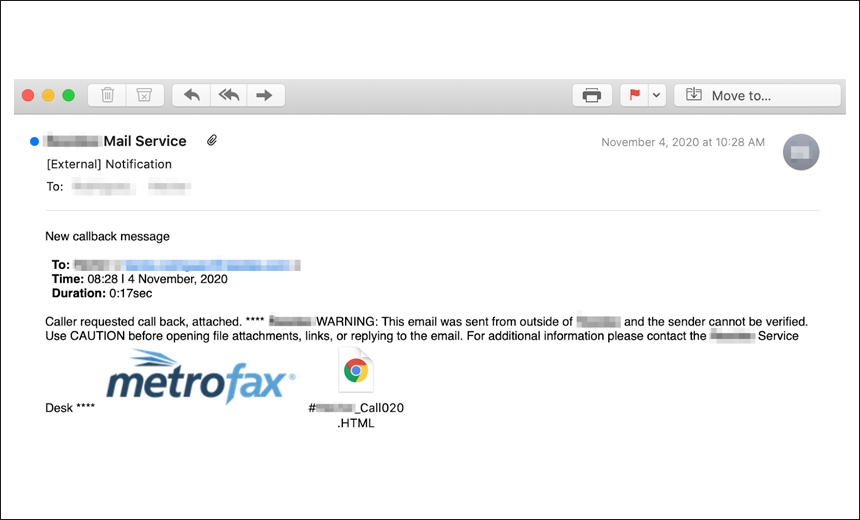
While deepfakes are making headlines, the most financially damaging cybercrime in the UAE remains business email compromise (BEC).
This type of fraud involves criminals gaining access to or imitating corporate email accounts to redirect payments. Globally, losses from BEC exceeded $2.9 billion in 2024 — and the Gulf region is increasingly targeted.
The UAE’s role as a global trade and finance hub makes it especially vulnerable. High-value transactions, international partnerships, and trust-based relationships create ideal conditions for impersonation scams.
In many cases, a single convincing email — timed correctly — is enough to trigger a costly mistake.
The Fake IT Support Trap

Another growing tactic in 2026 involves fake IT support scams.
An employee receives a message or call claiming their account has been compromised. The attacker, posing as a company technician, provides step-by-step instructions to “fix” the issue.
In reality, the employee is granting access to the attacker — either by installing remote software or sharing login credentials.
These scams succeed because they exploit human psychology. Authority and urgency push employees to act quickly, often without verification.
Preventing such attacks requires more than awareness — it requires a workplace culture where verification is encouraged, not seen as unnecessary delay.
A Rising Geopolitical Cyber Threat

The cyber threat environment in the UAE is also shaped by global politics.
In 2026, rising tensions in the Middle East have increased the risk of state-linked cyberattacks. Countries with advanced cyber capabilities have openly identified financial systems and technology companies as potential targets.
As a regional hub for global business and finance, the UAE sits directly within this landscape.
Authorities have confirmed that attempted attacks on critical infrastructure — including energy systems, ports, and financial networks — are ongoing. So far, national defences have prevented major breaches, but the frequency and sophistication of attacks continue to grow.
What Businesses Must Do Now
Cybersecurity is no longer just an IT issue — it is a boardroom priority.
Companies across the UAE are shifting from asking “if” they will be attacked to “when.”
Immediate steps include conducting regular penetration testing, running realistic crisis simulations, and evaluating supply chain vulnerabilities. A breach at a smaller vendor can quickly escalate into a major incident for a larger organisation.
For individuals, the advice is straightforward but critical. Enable multi-factor authentication, especially for banking and email. Be cautious of urgent financial requests — even if they appear to come from trusted sources. Always verify through a separate, secure channel.
And never install software based on unsolicited instructions from a caller.
The Human Firewall
Technology alone cannot stop cybercrime. The most effective defence remains people.
Organisations that perform best in cybersecurity are not necessarily those with the most advanced tools, but those with strong internal cultures. Employees must feel confident questioning unusual requests and reporting suspicious activity without hesitation.
In fast-moving environments, hesitation can be costly — but blind trust can be even more dangerous.
What It Means for the UAE
The UAE’s digital economy continues to expand rapidly, with growth in online banking, smart government services, and cloud-based business operations.
But every new digital service increases exposure to cyber threats.
The solution is not to slow innovation — the benefits are too significant. Instead, security must be built into every layer of digital transformation from the start.
Cybercriminals are evolving in real time. The UAE’s response must evolve just as quickly — combining technology, awareness, and strategy to stay ahead in an increasingly complex digital world.