





Every few years, a phrase resurfaces in the world of technology: the “transistor moment.” It describes that turning point when a scientific breakthrough stops being experimental and begins shaping the foundations of modern life.
In 1947, the transistor changed everything — enabling the creation of smartphones, servers, and the digital world we live in today.
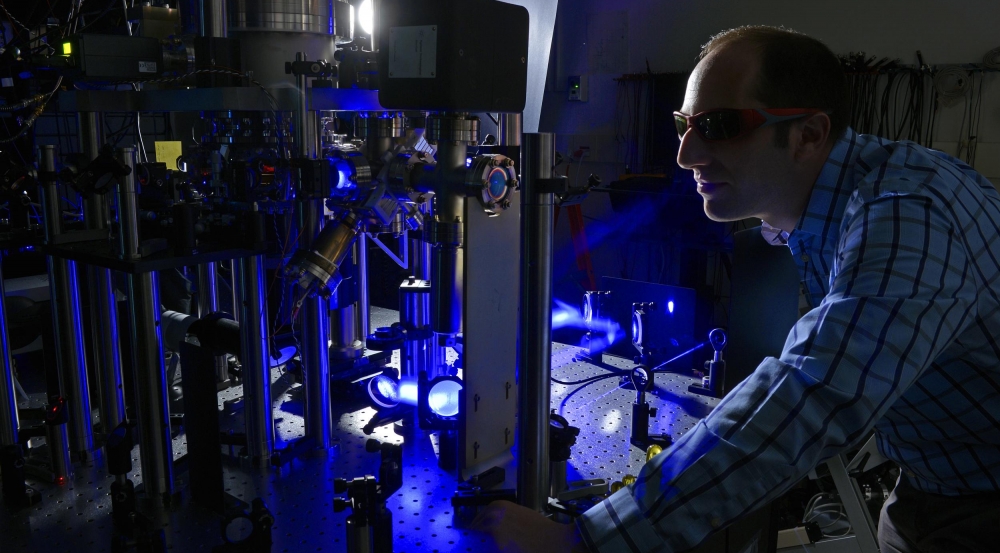
Now, in 2026, researchers from leading institutions including the University of Chicago, Stanford, and MIT have declared that quantum computing has reached a similar milestone. Their findings, published in Science, suggest the technology is no longer theoretical — it is entering a phase of real-world application.
“This transformative moment in quantum technology is reminiscent of the transistor’s earliest days,” said David Awschalom, director of the Chicago Quantum Exchange. The message is clear: the science is proven, and the next challenge is scaling it.
From Theory to Real-World Impact
For years, quantum computing has been described as “five years away.” That perception is now shifting.
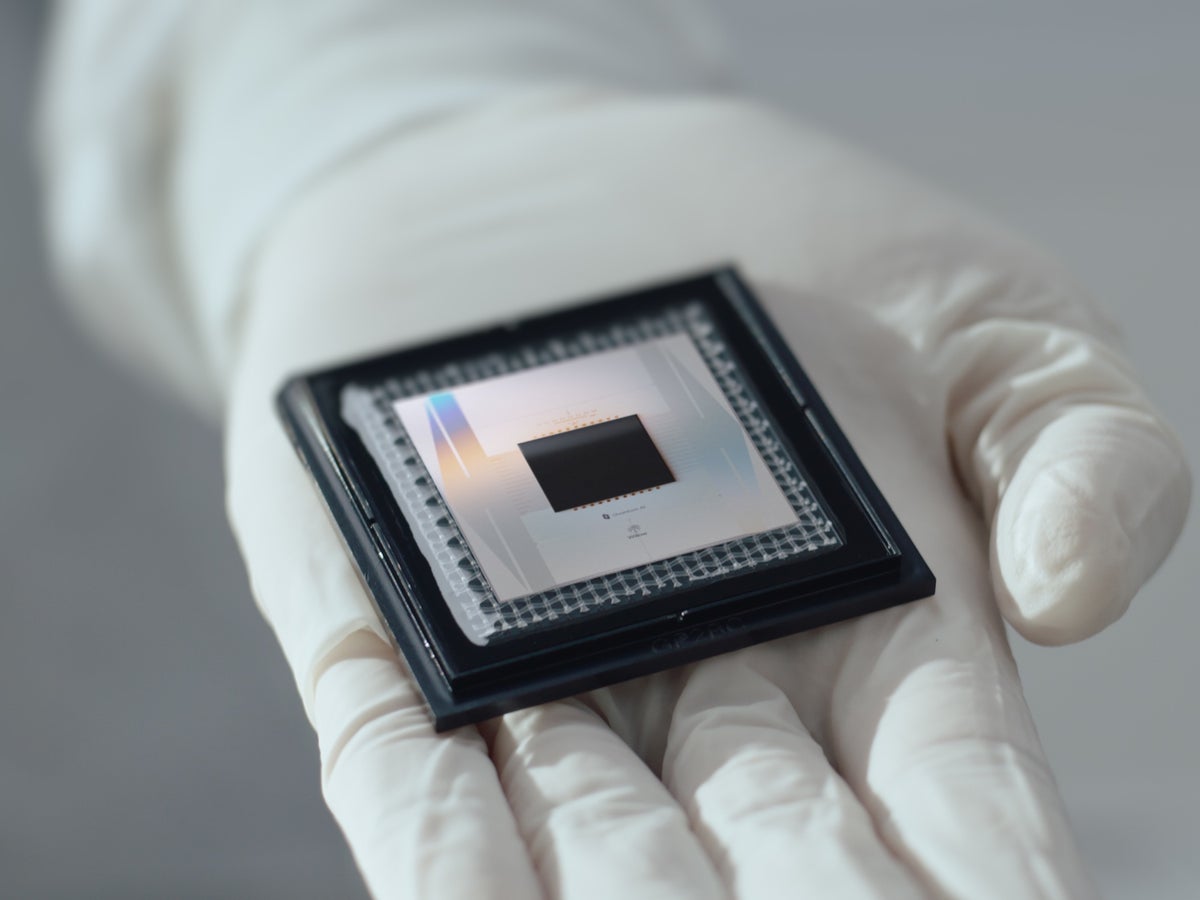
In 2026, the global quantum computing market has already crossed $10 billion. Major breakthroughs are accelerating progress. Google’s Willow processor, introduced in 2024, achieved a major milestone in 2025 by outperforming classical supercomputers on specific tasks. IBM is now targeting 2026 to demonstrate practical quantum advantage in real business applications.
Perhaps the most important development is the move into what experts call the “fault-tolerant foundation era.”
Early quantum systems struggled with instability. Qubits — the building blocks of quantum computing — are extremely sensitive to environmental conditions. But recent advances mean newer systems can reduce errors as they scale, making them far more reliable.
This is a critical step. A stable quantum system is no longer just a research tool — it becomes a platform for solving real-world problems.
UAE Enters the Quantum Race

For the UAE, quantum computing is not a distant concept — it is already part of national strategy.
In March 2026, Abu Dhabi’s Technology Innovation Institute announced a major step forward. Its quantum cloud platform has been integrated with Nvidia’s CUDA-Q environment, enabling advanced simulations and development.
The institute also reported success in solving complex optimisation problems — a key area where quantum computing delivers value.
These developments position the UAE among a small group of countries actively building their own quantum capabilities, rather than relying solely on external systems. Alongside the United States, China, Germany, and Japan, the UAE is now investing in sovereign quantum infrastructure.
Why Quantum Computing Matters

Quantum computers are not designed to replace traditional computers. Instead, they excel at solving highly complex problems involving massive variables and interactions.
This includes areas such as drug discovery, supply chain optimisation, financial modelling, and encryption systems.
For the UAE, the applications are particularly relevant.
In logistics, where the country operates some of the world’s busiest ports and airports, quantum optimisation could significantly improve routing efficiency and reduce operational costs.
In healthcare, quantum simulations could accelerate the development of new treatments, shortening timelines that currently take years or decades.
As industries become more data-driven, the ability to process complexity at scale becomes a competitive advantage.
The Encryption Challenge

4
Not all implications of quantum computing are positive.
The same power that allows quantum systems to solve complex problems could also break current encryption methods. Much of today’s digital security — from banking systems to government communications — relies on mathematical problems that classical computers cannot easily solve.
A sufficiently advanced quantum computer could change that.
Security experts refer to this future moment as “Q-Day” — when existing encryption standards become vulnerable.
Governments and organisations worldwide are already preparing by developing post-quantum cryptography. In the UAE, cybersecurity authorities have identified this as a priority, urging institutions to begin planning for quantum-resistant systems.
A Global Race for Quantum Leadership

The quantum computing landscape is highly competitive. Different approaches are emerging, each with its own strengths.
IBM is advancing superconducting systems integrated with cloud platforms. IonQ is developing trapped-ion technology known for high accuracy. Meanwhile, photonic quantum computing — using light particles — is attracting major investment as a scalable alternative.
This diversity reflects an industry still in its early stages. The final dominant technology has yet to be decided.
The Talent Gap Challenge
One of the biggest challenges facing the UAE — and the world — is talent.
Quantum computing requires expertise across physics, mathematics, and computer science. The number of skilled professionals globally remains limited, and competition is intense.
UAE universities are beginning to introduce quantum-focused programmes, but building a full ecosystem will take time.
Partnerships with global technology companies and research institutions are therefore critical. They not only drive innovation but also help develop the next generation of local expertise.
What It Means for the UAE
The transistor moment of 1947 did not immediately lead to modern technology. It took decades of development before its full impact was realised.
Quantum computing in 2026 is at a similar stage — full of potential, but still evolving.
For the UAE, the opportunity is significant. With strong investment, strategic positioning, and a track record of rapid adoption, the country is well placed to turn this emerging technology into real economic value.
But timing will be critical. The nations that move fastest in the next few years will define the future landscape of quantum technology.
The moment has arrived. What happens next will depend on how quickly that opportunity is seized.