






Wednesday was a day that reminded investors how rapidly sentiment can shift in a market shaped as much by geopolitical news as by corporate fundamentals. Stocks on Wall Street climbed decisively after reports emerged that the United States had delivered a formal peace proposal to Iran — even as oil prices pulled back from their recent highs and traders chose to price in the possibility of a diplomatic breakthrough rather than continued escalation. By the close, the Dow Jones Industrial Average had gained more than three hundred points, the S&P 500 had risen half a percent and the Nasdaq had advanced by close to one percent.
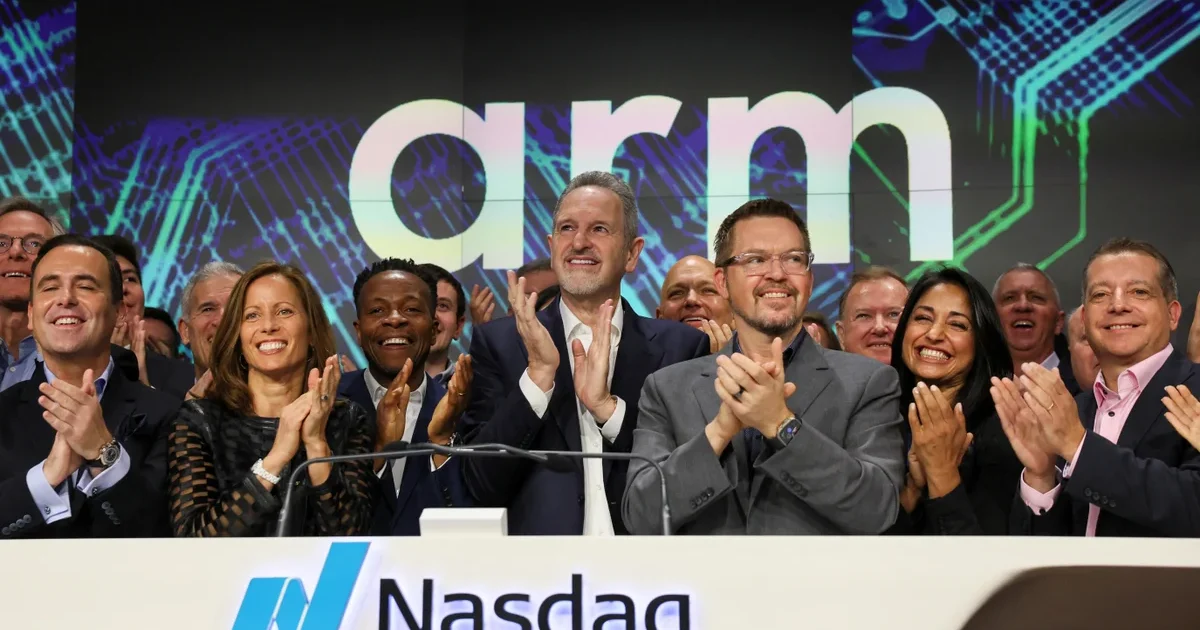
The rally came alongside one of the most significant individual stock moves of the week: Arm Holdings, the British semiconductor design company that sits at the foundation of virtually every mobile chip on the planet, surged thirteen percent after unveiling its first internally designed central processing unit chip. The announcement marked a strategic transformation for a company that has long licensed its architecture to others rather than competing directly in the chip market — and investors responded with enthusiasm.
Why the Iran Peace Reports Moved Markets
The mechanism by which Middle East peace talks move global stock markets is more direct than it might appear. The Iran conflict has been the primary driver of elevated oil prices for weeks, and high oil prices act as a tax on economic activity across virtually every sector. When the cost of energy rises, the cost of manufacturing, shipping, agriculture and consumer goods all rise with it. The prospect of a ceasefire deal that would stabilise or reduce oil prices therefore has genuine positive implications for corporate earnings and economic growth across the world.
Reports confirmed by multiple news organisations on Wednesday indicated that the United States had sent Iran a fifteen-point peace framework through Pakistani diplomatic channels. The New York Times first reported the existence of the plan, with subsequent confirmation from officials in Islamabad. The market response — a sustained rally that held through the afternoon session — reflected the first meaningful signal in weeks that a negotiated end to the conflict was at least being seriously pursued.
That optimism was complicated by Iranian state media’s parallel reporting that Tehran would reject the American framework and had prepared its own counter-proposal. Markets appeared to partially discount this negative signal, choosing to focus on the existence of active diplomatic engagement rather than the immediate failure of any single proposal. Whether that optimism proves justified will depend heavily on developments in the coming days.
Arm Holdings: From Licensor to Chipmaker
The Arm Holdings story that drove Wednesday’s tech rally is significant well beyond a single day’s trading. Arm’s business model has for decades been built on intellectual property licensing — the company designs the fundamental architecture that powers the processors in virtually every smartphone, tablet and increasingly every AI device on the planet, and it charges royalties to the manufacturers who build chips based on those designs. Apple, Samsung, Qualcomm and dozens of other chipmakers all pay Arm for the right to use its technology.
The announcement of Arm’s first in-house CPU chip represents a fundamental evolution of that model. By designing and potentially manufacturing its own processors, Arm moves from being a supplier to its customers’ supply chains to becoming a direct competitor in the chip market. The company projected that this new business line would generate fifteen billion dollars in revenue by 2031 — a figure that, if achieved, would represent a dramatic expansion of its financial profile.
Investment bank Raymond James upgraded its rating on Arm shares to outperform in response to the announcement, setting a price target that implies significant further upside from current levels. The analyst note described the shift as one that would yield strong operating profit and add an entirely new dimension to the company’s strategy. For the semiconductor industry, the signal is clear: the era of pure architecture licensing as the dominant business model for foundational chip technology may be giving way to a more integrated approach in which design, specification and manufacture converge in the same organisation.
What This Means for UAE Technology Investors
For investors in the UAE, particularly those with exposure to global technology equities through the Dubai Financial Market, the Abu Dhabi Securities Exchange or through international brokerage accounts, both stories carry direct relevance. The Iran conflict has been a significant source of portfolio volatility for weeks, with energy stocks outperforming while technology and consumer sectors have faced pressure from the risk-off sentiment that high-stakes geopolitical conflict generates.
Wednesday’s rally suggests that any credible movement toward a diplomatic resolution of the conflict would trigger a significant re-rating of risk assets, potentially producing strong gains across sectors that have been sold down. Technology stocks in particular — which are sensitive to interest rate expectations and economic growth forecasts — would benefit from the combination of lower oil prices, reduced inflation pressure and improved economic sentiment that a ceasefire would bring.
The Arm Holdings story is separately relevant for UAE investors with exposure to the global semiconductor sector, which has been one of the most closely watched corners of the market since the artificial intelligence investment boom began in earnest. G42, Abu Dhabi’s flagship AI company, operates in an ecosystem where chip access, architecture decisions and semiconductor supply chains are central strategic questions. A shift in Arm’s business model toward direct chip production changes some of the assumptions underlying that ecosystem.
Import Price Data Adds Inflation Concern
Not all of Wednesday’s economic data was positive. The United States Bureau of Labor Statistics released import price figures for February showing a 1.3 percent monthly increase — the largest in nearly four years and well above what economists had forecast. Export prices rose 1.5 percent over the same period. The data points to building pipeline inflation, as the cost of goods entering the American economy rises before those increases show up in consumer prices.
For the UAE, which imports the vast majority of its consumer goods and food supplies, similar dynamics are playing out. The combination of elevated shipping costs driven by Hormuz disruptions, higher global commodity prices and the stronger dollar that typically accompanies periods of geopolitical uncertainty creates a genuine inflationary headwind. The Central Bank of the UAE will be monitoring these pressures closely as it assesses the appropriate stance for monetary policy in the months ahead.
The Week Ahead
The dominant variable for global markets over the coming week is straightforward: will Iran and the United States find a basis for substantive ceasefire negotiations, or will the conflict continue to escalate? The rejection of the American fifteen-point framework by Iranian state media — confirmed after Wednesday’s market close — will test the durability of the rally when Asian markets open on Thursday. How investors choose to weigh the failure of the immediate proposal against the broader reality of active diplomatic engagement will set the tone for markets through the end of the month.
What is clear is that the interconnection between geopolitical events in the Gulf and financial market performance globally has rarely been more direct or more visible. For investors and businesses across the UAE, navigating this environment requires attention to diplomatic developments with the same rigour usually applied to corporate earnings reports and central bank decisions. The two have, for now, become inseparable.