




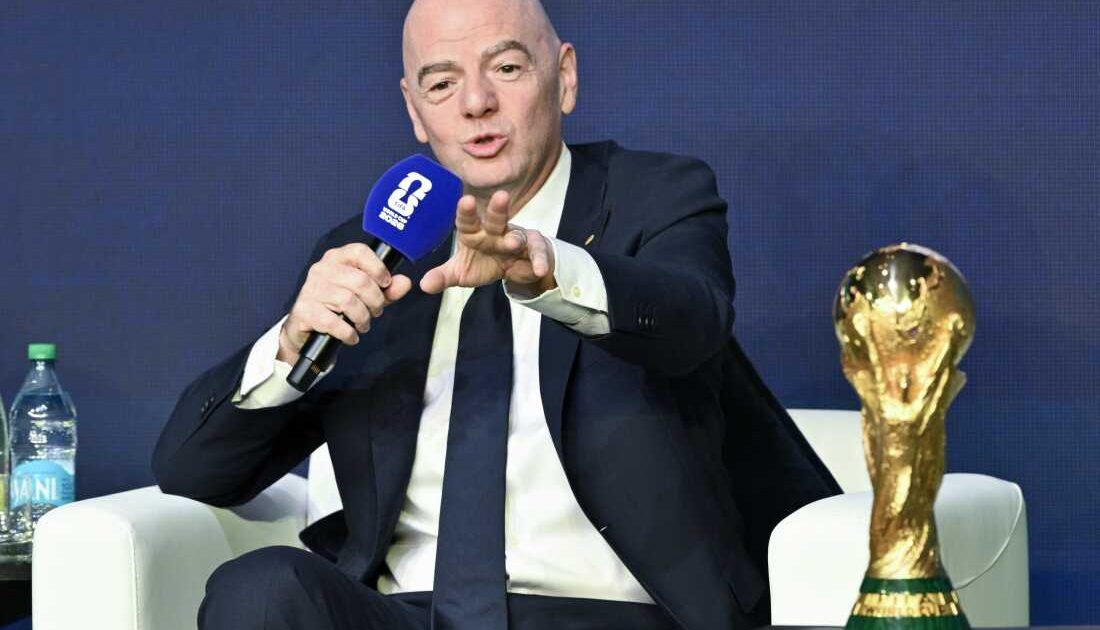
Football’s governing body has announced the final window of public ticket sales for the 2026 FIFA World Cup, with general availability opening on April 1 and running through to the conclusion of the tournament — a competition that runs from June 11 to July 19 across host cities in the United States, Canada and Mexico. The announcement comes after FIFA confirmed that more than one million tickets had already been purchased through previous sales phases, a figure that FIFA president Gianni Infantino described in January as representing demand equivalent to a thousand years of World Cups compressed into a single event.
For football supporters across the UAE — a country where the sport is followed with a passion that cuts across every nationality and community in its extraordinarily diverse population — the April 1 sales opening represents the last realistic opportunity to secure tickets to what is shaping up to be the most widely attended sporting event in human history. The tournament will feature 104 matches spread across sixteen venues, and FIFA has indicated that every single one of those matches is expected to sell out.
The Scale of What Is Being Staged
The 2026 World Cup is unlike any previous edition of the tournament in almost every measurable dimension. For the first time in the competition’s ninety-six-year history, it will be hosted by three nations simultaneously — the United States, Canada and Mexico — a format made necessary by the expansion of the tournament from thirty-two to forty-eight teams. That expansion adds sixteen additional teams, sixteen additional group stage matches and an entirely new round of thirty-two in the knockout phase, bringing the total match count to 104 compared to sixty-four at previous editions.
The host cities span the continent from Vancouver in the north to Guadalajara in the south, with the majority of matches concentrated in American venues including New York, Los Angeles, Dallas, Miami, Atlanta, Seattle, San Francisco and Boston. The final will be played at MetLife Stadium in East Rutherford, New Jersey — home to the New York Giants and New York Jets NFL teams, and one of the largest stadiums in North America with a capacity of over eighty-two thousand.
The commercial scale is equally unprecedented. FIFA is projecting total revenues from the 2026 edition that would far exceed any previous World Cup, driven by the combination of expanded match count, premium American broadcast rights fees, corporate sponsorship in the world’s largest advertising market and ticket revenues from the highest-capacity venues yet used for the tournament. The American sports market — the largest and most commercially sophisticated on the planet — is receiving the World Cup at a moment of peak football enthusiasm in the country, following the United States women’s national team’s sustained success and growing domestic interest in the sport at all levels.
How UAE Fans Can Still Get Tickets
For UAE residents planning to travel to the tournament, the April 1 sales opening is a critical date. FIFA’s ticketing system operates on a first-come, first-served basis during the general sale phase, with no allocation by nationality — meaning that UAE supporters have equal access to tickets for any match, including the final, alongside fans from every other country in the world.
The practical advice for those intending to purchase is to prepare in advance. FIFA’s official ticketing platform — the only authorised source for genuine tournament tickets — will handle enormous simultaneous demand when the sale opens, and the system has historically experienced significant queuing and access delays in the first hours of major sale windows. Creating a FIFA account, verifying identity documents and selecting preferred matches and seat categories before April 1 will reduce the time required when the sale goes live.
Travel planning is equally important. Direct flights from Dubai to the major US host cities — New York, Los Angeles, Miami and Dallas — are operated by Emirates and flydubai, as well as by several American and European carriers. The summer timing of the tournament coincides with peak travel season, and flights to the United States are already showing elevated prices. Supporters who have not yet booked travel should consider doing so regardless of ticket purchase, as accommodation in host cities is expected to be both scarce and expensive by the time of the tournament.
The Teams and the Stakes
The expanded forty-eight-team format brings several nations to their first World Cup, including some from regions that have historically been underrepresented at the tournament. The qualification process concluded in most confederations earlier this year, with the full list of participants now confirmed. Traditional powers including Brazil, Argentina, France, Germany, Spain and England have all secured their places, as have the three host nations through automatic qualification.
For the UAE football community, which includes supporters of virtually every national team in the world drawn from the country’s diverse expatriate population, the tournament offers something for almost everyone. The large South Asian community will be following India — making their first ever World Cup appearance after qualifying through the AFC route — with particular intensity. Pakistan supporters are absent from the tournament but will follow events closely given the sport’s growing profile in the country. The Arab world will be represented by Saudi Arabia, Morocco and others who navigated the competitive AFC and CAF qualification processes.
A Tournament That Goes Beyond Football
The 2026 World Cup arrives at a moment when football’s global reach is expanding rapidly in the American market, a development with significant commercial and cultural implications. Major League Soccer has grown substantially over the past decade, Apple’s broadcasting deal with the league has brought the sport to millions of new American viewers, and the arrival of marquee European players in the American league has accelerated mainstream attention.
Hosting the World Cup will turbocharge that momentum. The combination of forty-eight national teams — including the United States, which will be playing on home soil for the first time since the 1994 edition — a passionate and commercially powerful host market, and the sheer spectacle of 104 matches across sixteen stadiums means that the 2026 tournament will almost certainly set new records for global viewership. Estimates from broadcast analysts suggest cumulative global viewing figures could exceed six billion, surpassing every previous sporting event in television history.
For the UAE, a country that will be bidding to host the 2034 World Cup alongside Saudi Arabia’s confirmed hosting of the 2034 edition, watching how the 2026 tournament is managed and received will be instructive preparation. The infrastructure, hospitality, broadcast and security standards set in North America next summer will define expectations for future host nations. The UAE has the ambition and the infrastructure to meet those standards. The 2026 edition will show exactly how high the bar has been raised.